Stop throwing shit at the wall


There are between 15 and 40 different olive oils on the shelves of a supermarket, depending on the store’s size.
Extra virgin. Cold pressed. Organic. Italian. Greek. Spanish. Single origin. Mild. Fruity. Peppery. Premium. Everyday. The one with the nice bottle. The one your mother buys. And you, standing there, wondering why you need a fucking decision-making framework to buy olive oil ?
Now replace olive oil with insurance. Accounting software. Running shoes. A bank. A branding agency. Same issue every time: too many options.
We live in a world with an extraordinary amount of choice. And while businesses tend to look at their competitive landscape and think how do we get noticed? I think there's a more interesting question: how do we make it easier for someone to choose us?
Welcome to the world of positioning.
More isn't always more
In 2000, two psychologists set up two tasting tables in a supermarket in Menlo Park, California. One had 24 flavours of jam. The other had just six.
The bigger table attracted most of the crowd. Around 60% of shoppers stopped for a taste, compared with 40% at the smaller one. So far, more looked better.
Until people had to buy something. Of those who tasted from the table of six, 30% bought a jar. Of those faced with 24 choices? Just 3%.
More choice got more attention, yet, less choice got more customers.
In his book, psychologist Barry Schwartz popularised an idea called the paradox of choice. The more options we have, the harder it is to choose, and the less happy we are with whatever we eventually pick.
The science since then has added some nuance. More choice isn't inherently bad. Sometimes people like having 47 different kinds of cereal to choose from. The problem arises when choice itself becomes work.
When alternatives are hard to compare, choosing takes effort. Effort breeds decision fatigue, and fatigue, well, often ends with people walking away empty-handed.
Now look at your own market or competitive landscape.
You are probably one choice amongst many and your customer probably has tabs open comparing you to three competitors, a newsletter from a fourth, a LinkedIn ad from a fifth and a colleague recommending a sixth.
They aren't short of options but drowning in them.
And, unfortunately, businesses tend to respond to competition by adding things. Another feature. Another service. Another audience segment. Another ad campaign.
Throw enough at the wall and surely something will stick, right?
Not quite.
When everyone defaults to adding more, the advantage might actually be knowing what to leave out. That makes you easier to place and easier to choose.
In a sea of sameness, positioning is what gets a brand out of the jam (sorry).
Positioning is clarity
Open ten websites from companies in the same category and count how many are innovative. How many put the customer at the heart of everything they do. How many offer tailored solutions. How many are passionate about whatever the fuck they're selling.
Then open the company deck or chat with the founder and they’ll tell you that their brand is for everyone.
Their intent is probably genuine. It's also completely forgettable.
Generic positioning creates generic brands. When you try to appeal to everyone, you end up appealing to no one strongly enough to make them prefer you, let alone stay loyal to what your brand has to offer.
Usually, fear drives that. Because narrowing down feels like leaving money on the table. But in reality, that money was never on your table. It was on the table of the brand that dared to be clear.
So let's strip it down to the essential: positioning is the clarity around who you serve, what problem you solve for them, and how you solve it differently.
That's it.
No positioning pyramid or trademarked methodology with a sexy acronym. At its minimum, it’s three questions: Who are you for? What problem do you solve for them? How you do that differently?
Volvo is perhaps the oh-so-overused yet obvious example.
Like plenty others, they sell cars. There are faster cars, more luxurious cars, cheaper cars, more exciting cars. But Volvo decided long ago that the problem it wanted to own was safety, and then spent decades acting on it.
It introduced the three-point safety belt in 1959 and shared the patent with every other carmaker. It has researched real-world crashes since 1970 and recently, in 2020, capped the top speed of all its new cars at 180 km/h.
Safety appeared in the founders' first sales handbook almost a century ago. Today, it is still described as a guiding principle behind its innovation.
Volvo doesn't need to tell you everything a Volvo can possibly be. It only needs you to understand one thing: safety.
IKEA does the same with a different problem. Not who makes the most beautiful furniture, but who can put good design in the hands of people who can't normally afford it.
Neither company is only that thing, and positioning isn't the sum total of what a company does. A Volvo still needs comfortable seats. IKEA still needs wardrobes that don't break on you.
Give a fuck
Clarity gets you noticed, but caring is what gets you picked, and the caring has to start on your side.
If you want people to give a fuck about your brand, you've got to give a fuck about them first.
And you cannot meaningfully care about an abstract market of everyone. You can care about a person.
You can understand what they're trying to achieve. What frustrates them. What they're afraid of getting wrong. What alternatives they've tried. What they value. What they're willing to pay for. What keeps them up at two in the morning.
That's a third of the positioning equation: who you serve. And "serve" is the right word, because you can't serve someone you've never listened to. A persona slide with a stock photo of Jane Doe, 35 doesn't count.
Because answering “who are we for?” also requires answering “who aren't we for?” And that’s where positioning, by design, can get uncomfortable.
And understandably so.
Here again driven by fear. Because telling people they aren't your audience feels suspiciously like turning money away. So we create target groups that somehow include everybody from 18 to 65. We add secondary audiences. Then tertiary audiences. Then somebody points out an opportunity in a neighbouring segment and suddenly our positioning looks like a puzzle-box’s age recommandation for ages 9 to 99.
Pick someone specific, though, and something useful happens: you can finally say something specific to them.
Volvo talks to the parent strapping a newborn into the back seat.
Solve something worth solving
Understanding your audience isn't positioning on its own. You still need to matter.
A brand becomes relevant the moment someone recognises their own problem in what you say. The more precisely you describe it, the more understood they feel.
Which brings us to the second question: What problem do we solve? Not what do we sell. What do we solve?
People don't need another project-management platform. Another sneaker company. Another consultancy. Another sustainable water bottle.
They have enough.
What they might need is a way for a remote team to stop losing information between thirty-six different tools.
A running shoe for people who couldn't give less of a shit about breaking a personal record and just don't want their knees to hurt.
Accounting software built specifically for freelancers who would rather swallow their receipts than spend their Sunday sorting them.
Now we have something.
When we rebranded OuiSpeak, a multilingual live-interpretation service, we could have positioned it around interpretation technology, supported languages or its AI capabilities.
But none of those are the problem it solves.
The problem is much simpler: you have something worth saying, but not everyone in the room speaks your language.
So the whole thing boiled down to five words: Your event in every language.
That's the difference between describing what you sell and being clear about what you solve.
OuiSpeak sells live interpretation. What it solves is the language barrier between an event and everyone who should be able to take part in it.
And that's the point of positioning.
Knowing exactly who you give a fuck about.
Then solving something they give a fuck about.
Give them a reason to choose you
Knowing who you serve and what you solve gets you relevant.
But relevance isn’t enough.
Because chances are, you’re not the only company solving that problem.
Somebody else has noticed that remote teams lose information between tools. Somebody else knows freelancers hate their receipts. If the problem is real and worth money, assume three other companies are already on it.
So now comes the third question: How do you do that differently?
Take running shoes.
In a market most people would call saturated, On found a lane of its own: where performance meets lifestyle.
Every shoe brand's R&D department promises lighter, faster, better. So Swiss engineering alone was never going to be enough. On positioned itself somewhere between performance and flow state, treating movement not as exercise but as something that makes you feel more alive. In their words, a mission to "ignite the human spirit through movement".
Where Nike built its world around athletes and innovation, On built one around lifestyle, engineering and the feeling of running itself. You see it in the trademarked CloudTec sole (those with the holes). You see it in the run clubs and the shoe-design, in the idea that running is part of who you are rather than something you train for.
So when On says you'll feel like you're running on clouds, you don't have to take their word for it. You can see it, and you can live it.
Fifteen years in, On is one of the fastest-growing sports brands in the world, without ever trying to out-Nike Nike.
You see, you shouldn’t look to be different for the sake of being different. But to be different in a way that matters to the person you’re trying to serve.
Maybe it’s how you build the product. How you deliver the service. What you refuse to compromise on. The business model. The experience. The speed. The expertise. The way you make something complicated feel stupidly simple.
That’s the bit companies often skip.
They identify an audience. They identify a problem. Then they jump straight to a campaign and wonder why the result sounds exactly like everyone else trying to reach the same people with the same promise.
That’s the difference between a solution and a position.
A solution is what you do.
A position is what you do, in a way that could only come from you.
Turns out, aiming helps
Now there's a reason throwing shit at the wall feels productive.
You're doing something.
Planning a new campaign. Rolling out a new feature. Targeting new audiences. A/B testing a new message. Something will work eventually.
And maybe something does.
The problem is that when it sticks, you have no fucking idea why.
Positioning does the opposite. It reduces.
It asks you to choose an audience when you could target five. To solve one meaningful problem instead of claiming to solve ten. To build the business in a way only you could. To walk away from opportunities that don't reinforce the business’s purpose.
That's harder.
But in a world where your customer is standing in front of a shelf trying to decide which olive oil, bank, software, sneaker or branding agency to choose, adding another option isn't particularly useful.
Helping them understand why one is for them is.
So stop throwing shit at the wall.
You don't need to mean everything to everyone. You need to mean something to someone.


More good stuff

VCs invest in founders. They exit companies.
A startup begins as something its founders believe. A brand becomes something other people believe too.
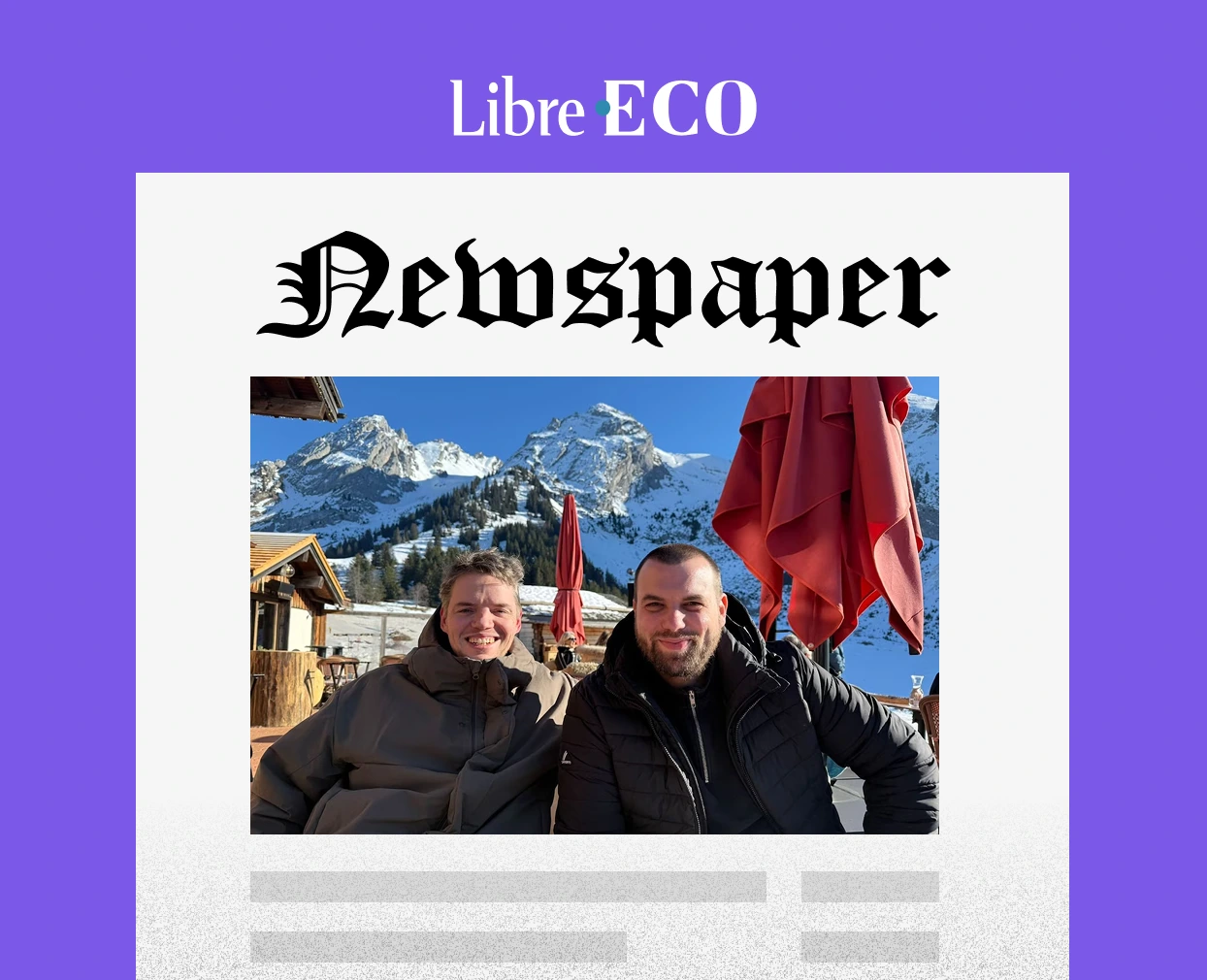
Nemesis launches in Switzerland
La Libre Eco with an exclusive interview on Nemesis opening in Lausanne Switzerland.
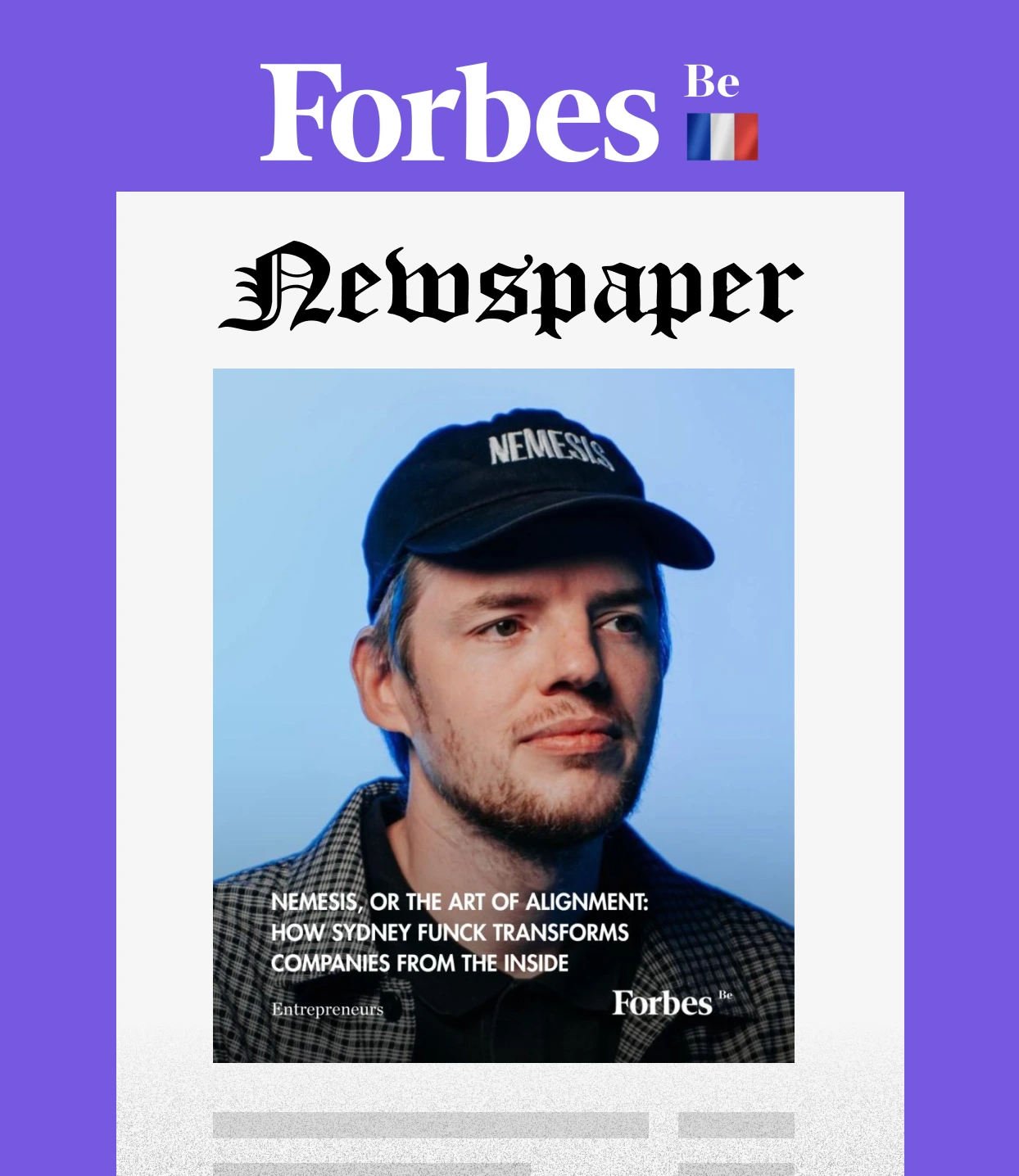
Forbes speaks about Nemesis (FR)
Martin Boonen from Forbes writes about Nemesis' vision to disrupt the branding industry.